



Hey there! I'm from a coin cell assembly supplier, and today I'm gonna walk you through the standard procedure for coin cell assembly in a laboratory. Coin cells, also known as button cells, are widely used in various small electronic devices due to their compact size and stable performance.
Pre - assembly Preparation
First things first, before we start the actual assembly, we need to get all the necessary materials and equipment ready. The main components for a coin cell include the cathode, anode, separator, electrolyte, and the coin cell casings.
The cathode and anode materials are crucial as they determine the electrochemical performance of the coin cell. For example, in a Lithium Coin Cell Battery, the cathode might be made of lithium cobalt oxide, and the anode could be graphite. We need to make sure these materials are of high quality and have the right specifications.
The separator is a thin porous membrane that prevents short - circuits between the cathode and anode while allowing the passage of ions. It's usually made of materials like polyethylene or polypropylene. The electrolyte is a conductive solution that enables the movement of ions between the electrodes.
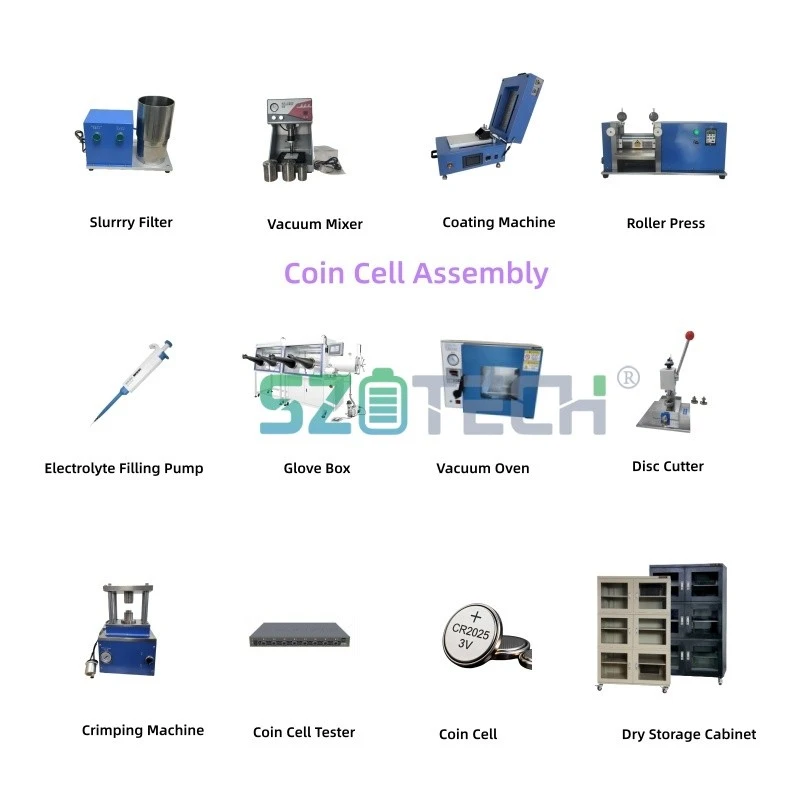
As for the equipment, we'll need a glove box filled with an inert gas, usually argon, to prevent the materials from reacting with moisture and oxygen in the air. We also need precision weighing scales to measure the correct amount of materials, a hydraulic press to seal the coin cell casings, and a Button Cell Tester to test the performance of the assembled coin cell.
Step - by - Step Assembly Process
Step 1: Cleaning the Coin Cell Casings
The first step is to clean the coin cell casings. We use a suitable solvent, like ethanol, to remove any dirt or contaminants on the casings. After cleaning, we dry them thoroughly to ensure there's no moisture left. This is important because even a small amount of moisture can affect the performance of the coin cell.
Step 2: Preparing the Electrodes
We cut the cathode and anode materials to the appropriate size. Then, we use a binder to attach the active materials to the current collectors. For example, we might use polyvinylidene fluoride (PVDF) as a binder for the cathode and anode materials. After applying the binder, we dry the electrodes in an oven at a specific temperature for a certain period to remove the solvent and ensure good adhesion of the active materials.
Step 3: Placing the Separator
Next, we place the separator on top of the anode. The separator should cover the anode completely to prevent short - circuits. We need to handle the separator carefully to avoid any tears or damage.
Step 4: Adding the Electrolyte
Once the separator is in place, we add the electrolyte. We use a pipette to accurately measure and dispense the right amount of electrolyte onto the separator. The amount of electrolyte is crucial as it affects the ion conductivity and the overall performance of the coin cell.
Step 5: Placing the Cathode
After adding the electrolyte, we place the cathode on top of the separator. Make sure the cathode is properly aligned with the anode and separator.
Step 6: Sealing the Coin Cell
Finally, we place the coin cell casings on top of the assembled components and use a hydraulic press to seal them. The pressure and time of pressing are carefully controlled to ensure a good seal. A proper seal is essential to prevent leakage of the electrolyte and to maintain the integrity of the coin cell.
Quality Control and Testing
After the coin cell is assembled, we need to perform quality control and testing. We use a Button Cell Tester to measure the open - circuit voltage, internal resistance, and charge - discharge performance of the coin cell. If the coin cell doesn't meet the required specifications, we need to troubleshoot and identify the problem. It could be due to issues with the materials, the assembly process, or the sealing.
Why Choose Our Coin Cell Assembly Service
As a coin cell assembly supplier, we have a team of experienced technicians and state - of - the - art equipment. We ensure that every coin cell we assemble meets the highest quality standards. Our strict quality control process guarantees the performance and reliability of our Coin Cell products.
We also offer customized coin cell assembly solutions. Whether you need a specific type of cathode or anode material, or a unique design for your coin cell, we can work with you to meet your requirements. Our goal is to provide our customers with the best coin cell products and services.
Let's Connect
If you're interested in our coin cell assembly services, we'd love to hear from you. Whether you're a researcher in a laboratory, a manufacturer of electronic devices, or someone looking for high - quality coin cells, we can provide you with the solutions you need. Don't hesitate to reach out and start a conversation with us about your coin cell needs. We're here to help you get the best coin cell products for your applications.
References
- "Battery Technology Handbook" by David Linden and Thomas B. Reddy.
- Journal articles on coin cell research and development from well - known scientific journals such as "Journal of Power Sources" and "Electrochimica Acta".